
SkillSync
Payback &
Pricing
Payback
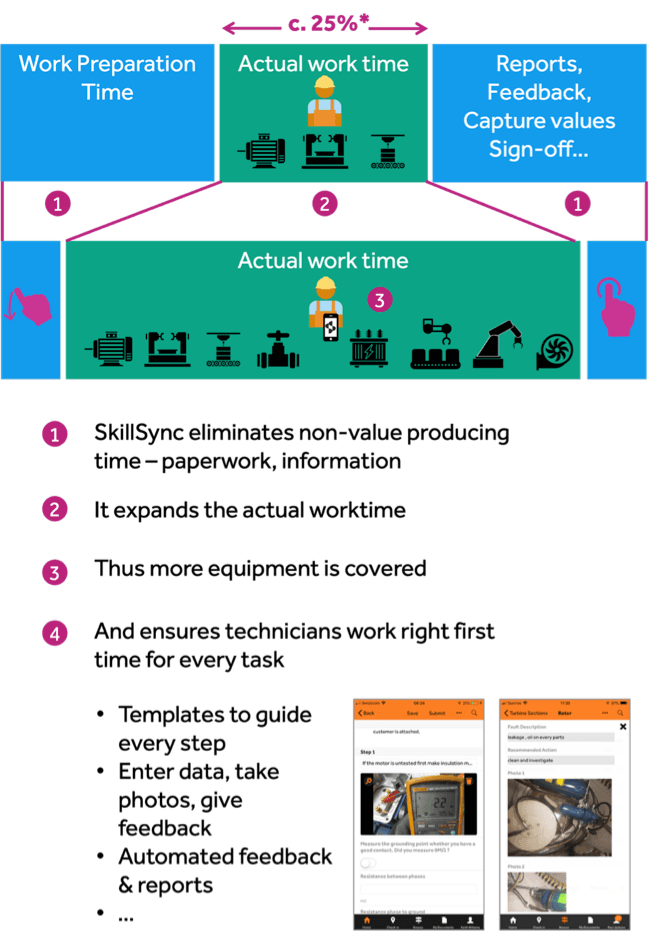
The cost of SkillSync is almost always less than 5% of the tangible value generated for the Customer. Some examples assuming a work year of 220 days:
Workshops – payback by Day 5
Technicians get more done at better quality, non-value work is eliminated, meaning more billable, customer work can be done
1. Cost Baseline (What does a technician cost us?)
Variable
Value
Working hours per technician per year
1,600 h
Fully burdened cost per hour
€ 50
Fully burdened cost per year
€ 80,000
Working days per year
220
Fully burdened cost per working day
€ 364
2. Commercial Structure (What do we charge, and what's our margin?)
Variable
Value
Fully burdened cost per hour (base)
€ 50
Commercial markup per hour (margin added before invoicing)
€ 40*
Invoiced price per hour to customer
€ 90
3. Productivity Impact of SkillSync (How much extra capacity does it create?)
Variable
Value
Estimated productivity improvement
30%
Additional hours freed up per technician per year
480 h
Share of productivity gain that is billable to customers
50%
Billable hours actually invoiced
240 h
Incremental revenue per technician per year (240 h × € 90)
€ 21,600
Incremental revenue per technician per working day (€ 21,600 / 220 days)
€ 98.18
4. Payback Calculation (When does it pay for itself?)
Variable
Value
SkillSync cost per technician per year
€ 500
Incremental revenue per working day
€ 98.18
Payback period
5.1 working days
Chain of Logic: Cost Baseline → Commercial Structure (sets price per hour) → Productivity Gain (sets extra billable hours) → Incremental Revenue → Payback vs. SkillSync Cost.
*The € 40 is the margin/markup the company adds on top of its own cost
Renewables services - payback by Day 4
Compliance is highly simplified, reporting and feedback are automated and customized, and actual work is executed more efficiently.
1. Cost Baseline (What does a technician cost us?)
Variable
Value
Working hours per technician per year
1,600 h
Fully burdened salary cost per hour
€ 60
Fully burdened salary cost per year
€ 96,000
All travel costs per year
€ 30,000
Fully burdened cost per year
€ 126,000
Working days per year
220
Fully burdened cost per working day
€ 573
2. Commercial Structure (What do we charge, and what's our margin?)
Variable
Value
Fully burdened cost per hour (base)
€ 72
Commercial markup per hour (margin added before invoicing)
€ 40*
Invoiced price per hour to customer
€ 112
3. Productivity Impact of SkillSync (How much extra capacity does it create?)
Variable
Value
Estimated productivity improvement
30%
Additional hours freed up per technician per year
480 h
Share of productivity gain that is billable to customers
50%
Billable hours actually invoiced
240 h
Incremental revenue per technician per year (240 h × € 112)
€ 26,880
Incremental revenue per technician per working day (€ 26,880 / 220 days)
€ 122.18
4. Payback Calculation (When does it pay for itself?)
Variable
Value
SkillSync cost per technician per year
€ 500
Incremental revenue per working day
€ 112.18
Payback period
4.1 working days
Chain of Logic: Cost Baseline → Commercial Structure (sets price per hour) → Productivity Gain (sets extra billable hours) → Incremental Revenue → Payback vs. SkillSync Cost.
*The € 40 is the margin/markup the company adds on top of its own cost
Industry and manufacturing – payback by Day 10 to 20
Quality of finished product, value of downtime and its reduction, higher reliability and availability – all computed in OEE, determines the payback
OEMs – payback is gained fast through efficiencies and costs savings across the whole organization
Internally - R&D, Manufacturing, Field Service, Sales & Marketing
Externally – at customer site, customer efficiencies and OEE, upskilling customer technical staff…
Pricing
SkillSync: A configuration for any profile & needs

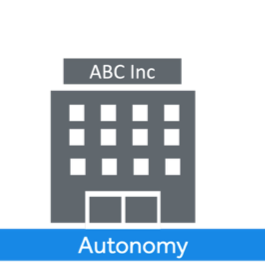
Customer outsources almost all work to TechPedia Solutions
Customer fully independent, save for SkillSync development and updates
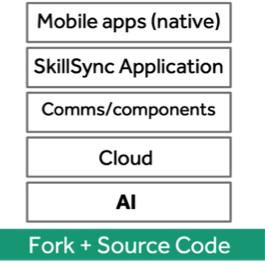
Customer obtains a perpetual license fork and is free to develop the product independently
The model you choose will depend on the services you require. For example, for most operations the Subscription model will apply best and all or some of the support operations such as digitizing work documents, templates, automated report building and user management can be managed by us leaving you free to focus on the demands of the job. For other companies it will make sense to manage all such services inside the company.
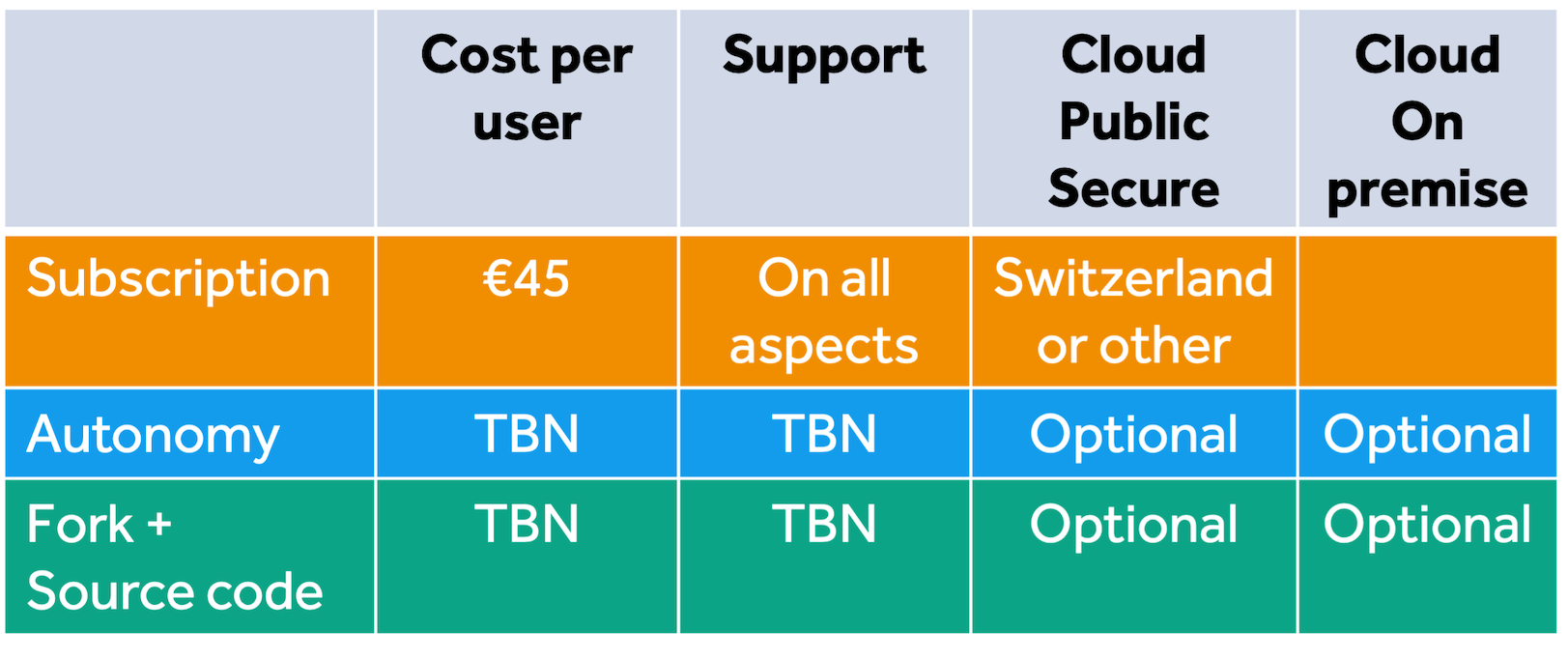
TBN = To be negotiated
Basic model - Subscription
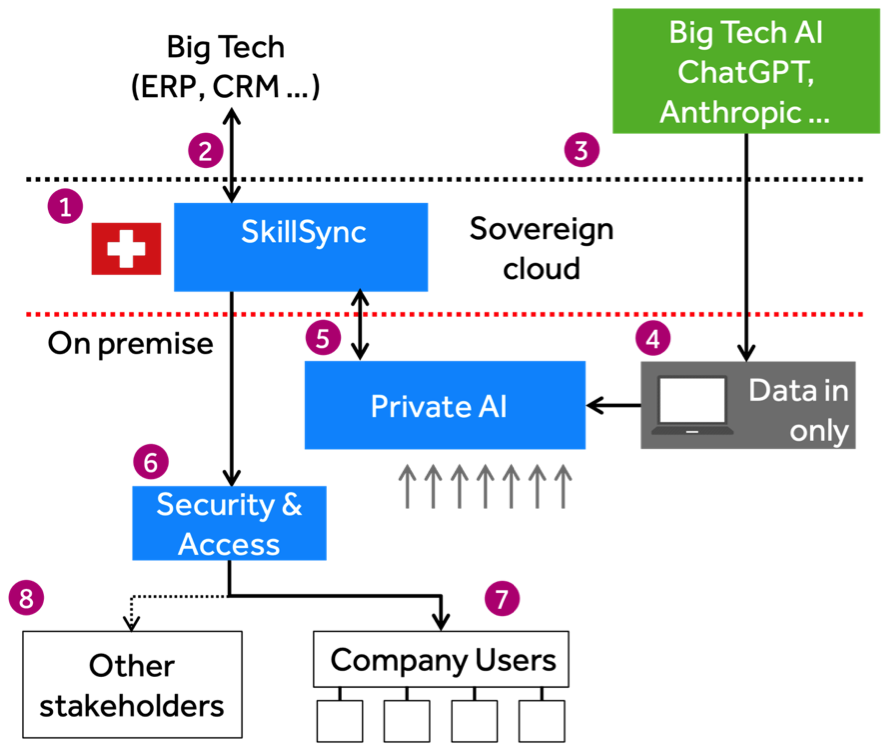
TechPedia managed solution – secure public cloud
- SkillSync is hosted in a secure, sovereign cloud based in Switzerland (other solutions such as AWS are available)
- SkillSync offers out-of-the-box APIs to other systems
- A company may decide to use LLMs …
- …but likely in a secure way
- SkillSync’s architecture is for using one or multiple private AIs (typically open source)
- Access for users is via enterprise-grade security and access rights…
- …meaning users can be grouped or classed according to access and edit rights
- Outside stakeholders such as suppliers can be granted restricted access
Autonomy - On-premise solution
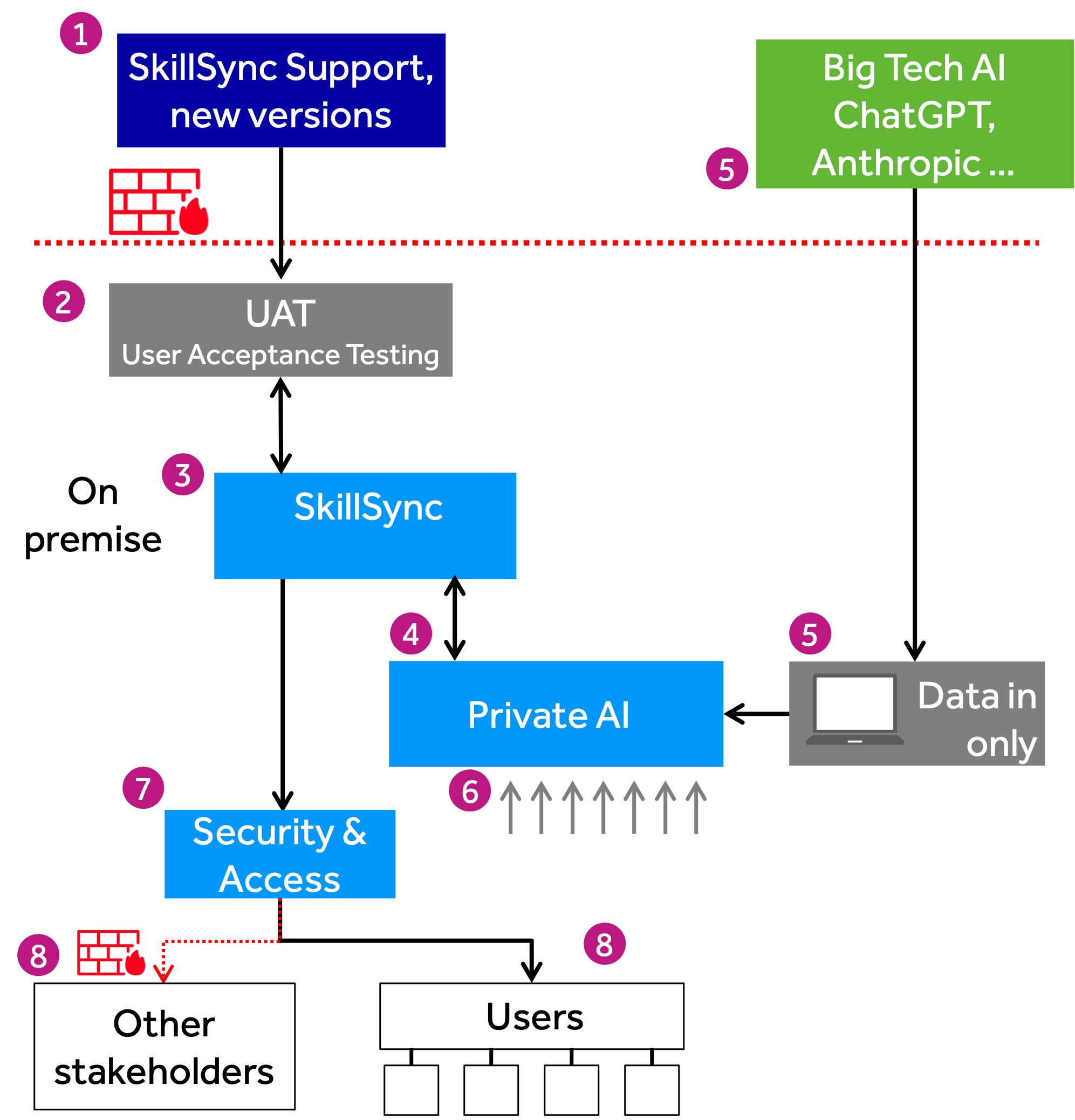
SkillSync running in your private cloud
- Customer receives upgrades via UAT
- UAT tests for security
- UAT delivers to on-premise SkillSync cloud configuration
- Private AI is connected to SkillSync
- Optionally, LLM connection through a secure, inbound-only (Data In) connection
- Input from users to Private AI
- Security and Access rights
- SkillSync made available across users, departments...
SkillSync
SkillSync compresses the time to master complex equipment, report issues, and solve complex tasks
SkillSync transforms static documentation into dynamic, AI-powered guidance your teams can trust.